
QR Sending & Receiving
This guide aims to provide an overview for integration with our QR sending & receiving solution, covering key components such as inward (P2P) and outward (P2P, P2M, P2B) transactions. Whether you’re building a platform with QR capabilities or streamlining a financial workflow, this guide will ensure seamless and secure integrations with our microservices.
Definition of Terms
Term | Definition |
|---|---|
P2P | Person to Person transfers - payments to made from an individual account to another individual account |
P2B | Person to Biller - payments to made from an individual account to a biller |
P2M | Person to Merchant - payments to made from an individual account to a merchant |
BancNet | a Philippine-based interbank network connecting the ATM networks of local and offshore banks Instapay, also one of the two clearing houses in the PH |
InstaPay | A real-time electronic fund transfer (EFT) service between bank accounts |
QRPh | National standard for QR code sending, mostly for Point-of-Sale. |
Use Cases
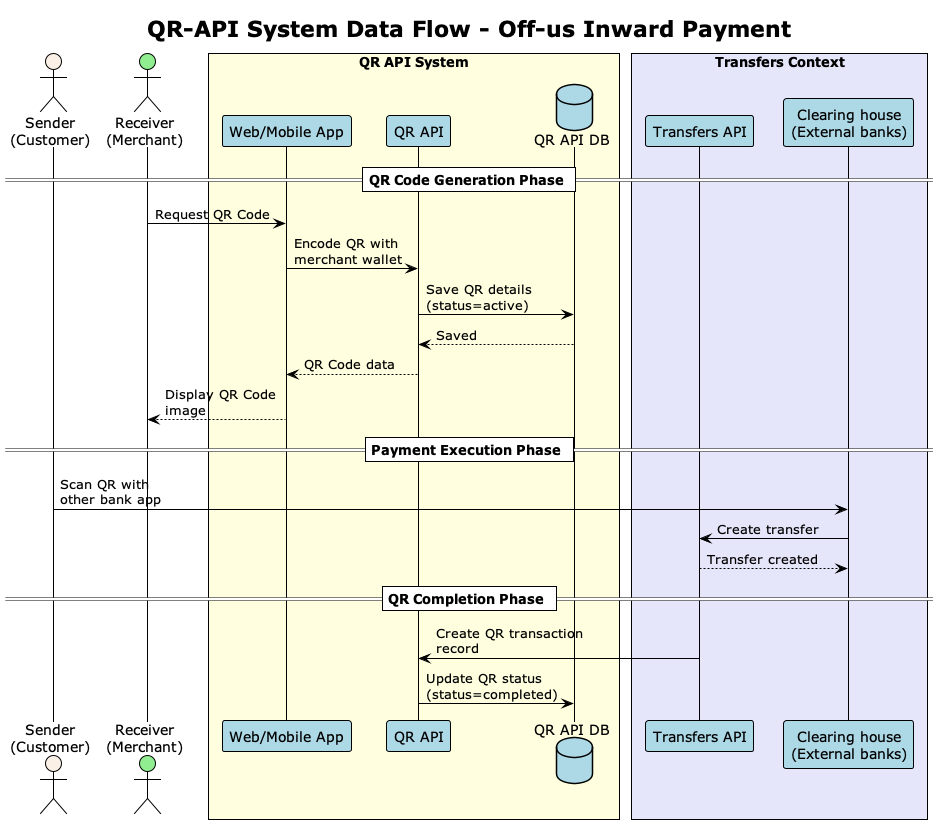
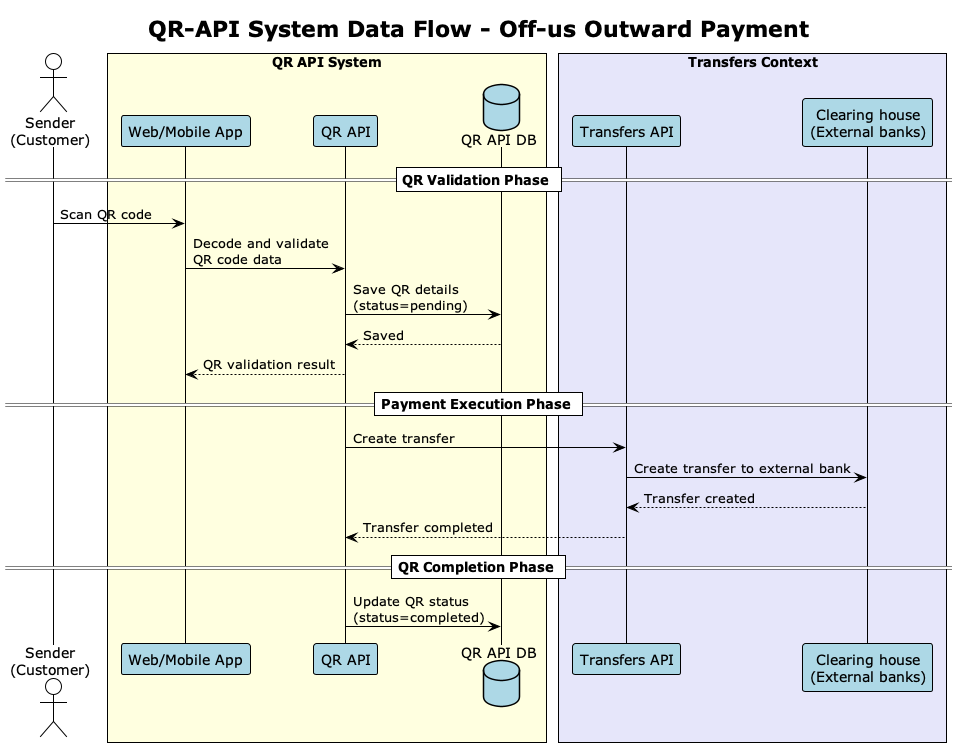
QR Generation, Sending, and Receiving can be a valuable tool for merchants with their own applications, where their own wallets or their end-user’s wallets are required to send and receive funds from other banks via QR, or send payments to Merchants or Billers via QR.
- Receive funds from other banks, directly to your PayMongo Wallet, by scanning either a dynamic or static QR.
- Send funds to other banks by scanning their bank’s QR, and deduct the balance directly from your PayMongo Wallet.
- Pay for goods or services from stores by scanning their QRPh standee or Point-of-Sale machine-generated QR codes. Funds are deducted from your PayMongo Wallet balance.
- Pay for billings by scanning accepted billers’ QR code printed on the SOA. Funds are deducted from your PayMongo Wallet balance.
Implementation
Additional Guidelines for Integration
Should there be missing fields or mandatory values in the scanned QR, the API will respond with the missing fields or values
Updated 3 months ago